

Vaporizer for full-melt legal hemp extracts
Battery-free
Multi-load
Cold-start
On-demand
Simple maintenance
Full-melt, nothing else!
Hash and hemp concentrates of quality once reserved only to the most passionate producers are now accessible to all, even if far too little known: full-melt extracts.
Completely liquid and free-flowing when heated, they release delightful vapors with aromas and flavors as rich as they are varied.
With Sipqo, discover a unique vaporizer, developed specifically for these high-quality full-melt extracts!
Built around a removable vaporization tray
Four copper vaporization micro-bowls mounted on a stainless steel frame . . .

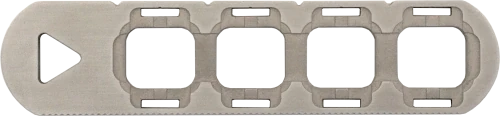
. . . make a removable multi-load vaporization tray . . .
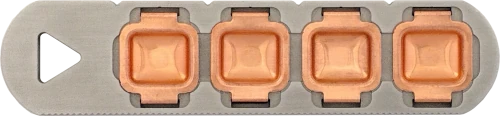
. . . that inserts into the front of the vaporizer . . .

. . . and can be moved manually from one micro-bowl to the next using the side notch.

A quartz window allows for easy validation of the selected micro-bowl and observation of the vaporization process.
A durable surface finish
The aluminum shell of the Sipqo vaporizer has undergone a food-grade hard-anodization treatment, providing a safe, aesthetic, and durable long-term protective finish of its surfaces.
The micro-bowls in details
- each micro-bowl can vaporize up to 40 mg of extract per load, over the course of 1 to 10 inhalations
- each micro-bowl is thermally independent from the others, allowing them to be vaporized one after the other
- each micro-bowl has a limited lifespan estimated to a minimum of 6 months, and is easily replaceable (10 micro-bowls included with each vaporizer).
An ultra-short thermal cycle
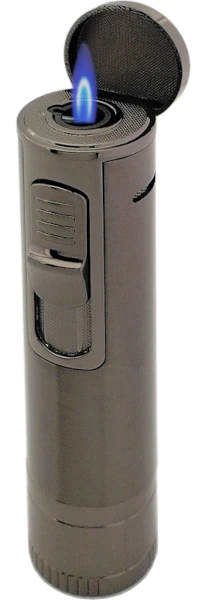
The blue flame of a complete-combustion lighter (included with each vaporizer) provides an adjustable and quickly refillable heat source . . .
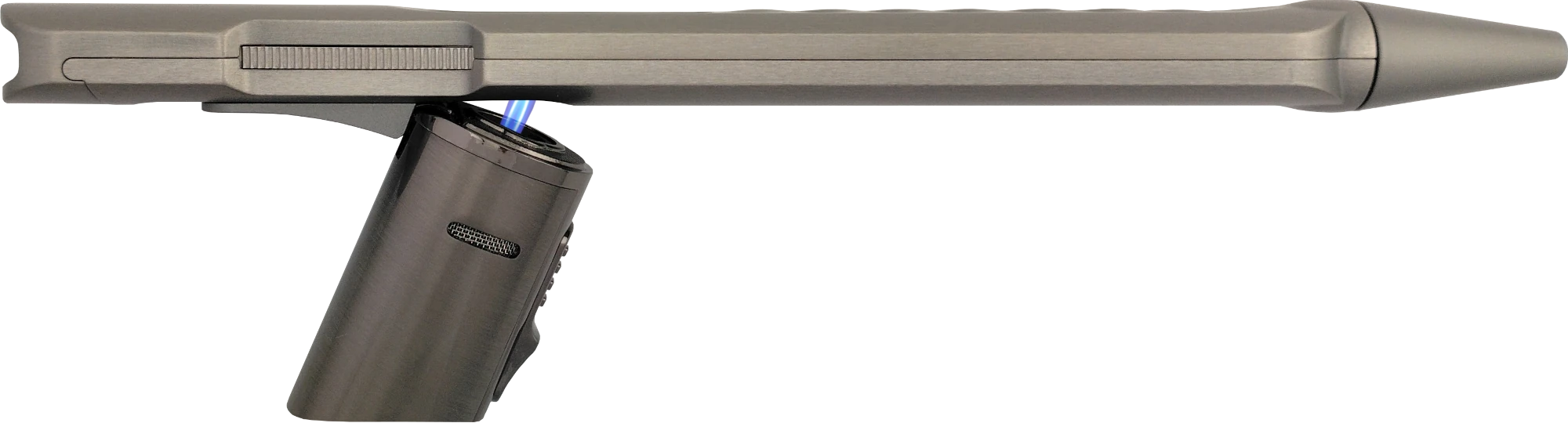
. . . a chimney beneath the vaporizer allows the flame to heat the selected micro-bowl through direct contact . . .

. . . and an adjustable stopper ensures the lighter is correctly positioned under the chimney.
The lighter is ignited at the same time the inhalation begins, but it’s turned off before inhalation ends . . .
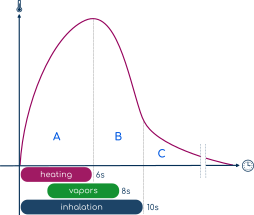
(A heating, B active cooling, C passive cooling)
. . . the micro-bowl begins to cool during inhalation and completes an (almost) full thermal cycle with each puff.

Cold-start
Each puff begins and ends with a micro-bowl that is close to room temperature
Great flavor, even with small amounts!

On-demand
The first vapors appear less than 2 seconds after the flame is applied
No waiting, as long as the tray is loaded!

Start-Stop
Pause and resume your vaporization at any time without wasting any extract or energy
Take your time, no stress, no hassle!
One micro-bowl, many flavors!
Much like what happens during a distillation, the most volatile molecules vaporize more quickly; this alters the composition of the extract with each puff, causing its flavor to evolve as it is consumed.
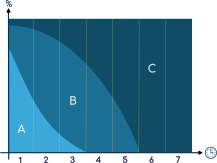
To each its own pace!
Want a single puff without doing a full session (micro-dosing)?
It will take you less than 10 seconds to satisfy it and finish inhaling, with no wait or additional preparation required (provided the tray is already loaded!).
Dozing off during a session?
A micro-bowl not finished by the end of a session?
Instantly resume exactly where you left off with absolutely no loss!
An untimely cough after the first inhalation?
Take the time to recover and don’t rush to inhale again not to have to reheat the vaporizer!
With Sipqo, you set the pace to your vaporizer, not the other way around!
Simple maintenance
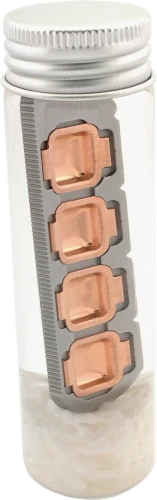
The vaporization tray should be cleaned after each use using the cleaning bottle included with the provided storage case. . . .
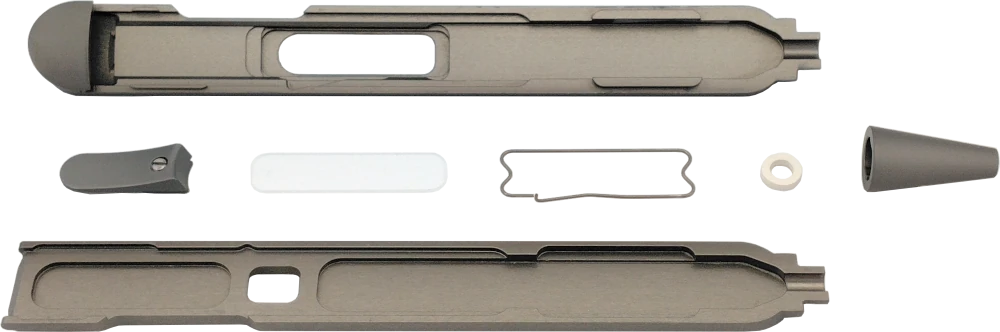
. . . the vaporizer can be completely disassembled in a few seconds to easily clean every last nook and cranny.
The included storage case allows you to organize the vaporizer along with all its accessories and spare parts (with the exception of the lighter) in a compact and convenient format . . .
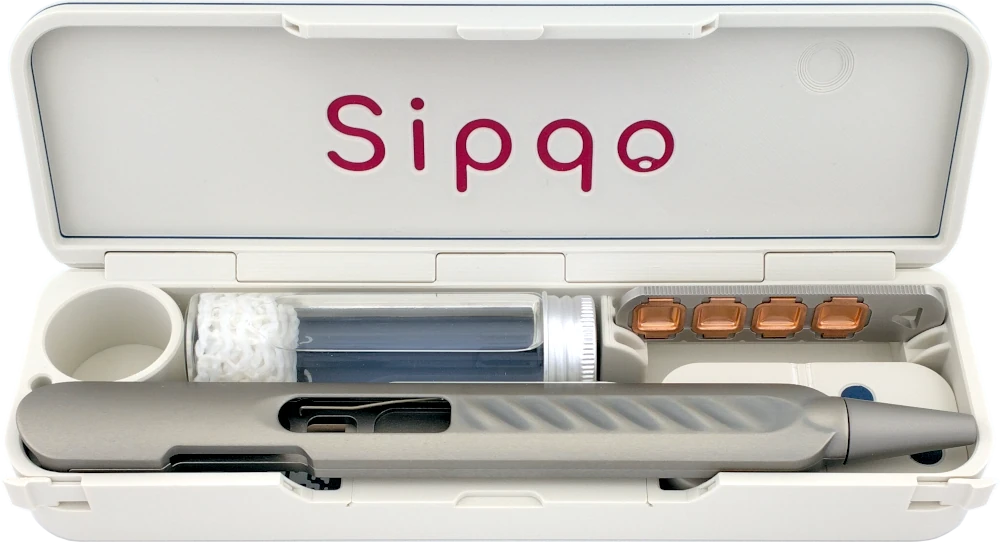
. . . it can accommodate up to 3 vaporization trays and contains a small dual-compartment box for variable uses.
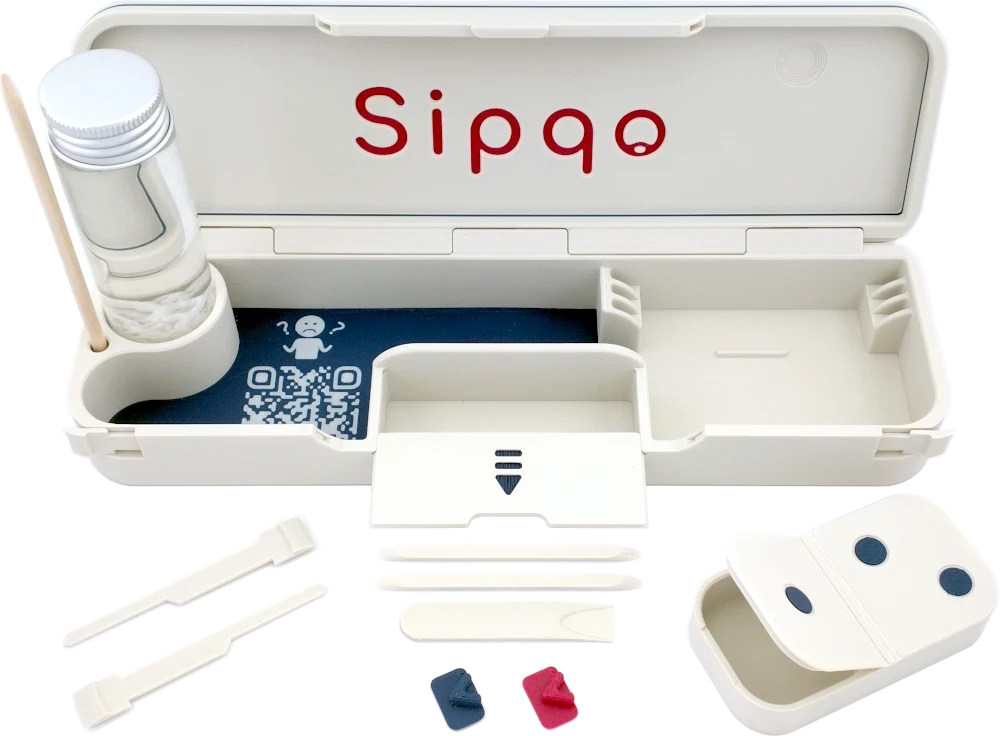
3D printed in PLA (a bio-sourced plastic), its 3D STEP models and optimized 3MF print files (OrcaSlicer) are available for download in the documentation section for personal modification and printing.
And also . . .
A vaporizer for the
(soon-to-be) former smokers
Switching to vaporization can be challenging for smokers (or former smokers), often due to the lack of the familiar throat hit experienced when inhaling or exhaling vapor.
By utilizing terpene-rich full-melt extracts, a short vapor path, and dense vapors, the Sipqo vaporizer was developed to help recreate those sensations!
Click here to learn more about the story behind its development and the reasons for its creation.
A vaporizer to
discover micro-dosing
Vaporize amounts as small as 5 mg by dividing your extract across 2, 3, or 4 separate micro-bowls rather than just one and try micro-dosing to:
- spread the vaporization duration over time, often with the added benefit of reducing consumption
- achieve a better distribution of flavors and active compounds across successive inhalations
- attempt to limit the tolerance build up to active compounds over time
Reminder : full-melt only !
The thermal conduction heating method used by Sipqo is not suitable to vaporizing extracts that are not full-melt, nor for dried flowers, which require convection heating (hot air).
Frequently Asked Questions
General
What is a hemp extract?
A hemp extract is the result of mechanically or chemically separating a plant’s trichomes (or their contents) from the rest of the plant matter, without dilution or the addition of external compounds. There are many types of extracts, depending on the production method used: charas (hand-pressed); traditional resins such as Afghan, Ketama, or « pollen » (dry-sieved); modern resins like Ice-O-Lator, Bubble Hash, or Piatella (water-sieved); rosin (heat-pressed); as well as honey, crumble, butter, wax, BHO, distillates (solvent-based extraction), and others.
What is a full-melt hemp extract?
A hemp extract is considered full-melt when it turns completely liquid and runny upon heating, forming large, perfectly transparent bubbles while releasing a rich and diverse array of aromas and flavors.
Unlike other grades of extracts, these can be vaporized using thermal conduction.
Which lighter to use with the Sipqo vaporizer?
To ensure a good vaping experience, the lighter should have the following characteristics:
- complete combustion (blue flame, torch-style)
- single-jet nozzle only (otherwise it will be too powerful)
- rounded shape for better contact with the stopper
- a cap that does not get in the way when the lighter is positioned beneath the vaporizer
Can I use a standard yellow-flame lighter with the Sipqo?
No. Lighters that produce a yellow flame undergo incomplete combustion, which creates soot (black, toxic smoke). This would quickly clog both the vaporizer and your lungs, negating some of the key benefits of vaporization.
With a complete-combustion lighter (blue flame), the combustion byproducts should consist only of water and carbon dioxide (CO2).
The difference between a yellow flame and a blue flame does not stem from the fuel itself, but rather from the amount of oxygen available during the chemical reaction, a factor that depends heavily on how the fuel gas and the ambient air are mixed.
How many trays/micro-bowls can I vaporize with a full tank in the lighter?
We estimate that the lighter provided with the Sipqo vaporizer allows for the vaporization of at least 10 trays, equating to 40 individual cups, on a single full tank (approximately 1 g of extract in total @25 mg per micro-bowl).
What is the estimated lifespan of the micro-bowls?
We still lack sufficient data to provide a definitive answer; however, with sustained daily use (several trays vaporized per day) and proper maintenance, we estimate their minimum lifespan to be around 6 months.
With less frequent use, their lifespan could potentially reach one year (maybe even longer).
Isn’t the use of copper dangerous?
Drinking too much water is dangerous. More than 400 years ago, the Swiss physician Paracelsus observed:
Everything is poison, and nothing is without poison; the dose alone determines whether something is not a poison.
Today, we know that this principle does not apply to every substance. Nevertheless, it does appear to apply to copper as it’s an element essential to the functioning of the human body:
Copper, and especially its soluble salts, is known to be toxic or poisonous in large or high doses. In very small amounts, it is a well-known trace element. The human body contains approximately 150 mg of copper in various forms, and the daily requirement for a 75 kg person is around 2 mg.. Wikipedia (translated from FR)
I have never been able to detect any loss of mass in a micro-bowl after several months of daily use; therefore, I assume that there is no measurable loss of copper over the course of its lifespan under normal operating conditions, and consequently no absorption of the metal at levels that could be dangerous to the human body. Furthermore:
- The temperatures reached by the micro-bowls during vaporization remain well below the melting point of copper (200°C vs. 1,000°C)
- With use, the micro-bowls very quickly become coated with a thin film of carbon (a seasoning layer, similar to that found on a cast-iron pan), which partially insulates the copper from the concentrate being vaporized
- The temperatures reached by the micro-bowls during vaporization remain well below the melting point of copper (200°C vs. 1,000°C)
Isn’t there a risk that the aluminum casing might melt upon contact with the flame from the lighter?
No. Although a lighter flame can exceed 1,000°C while the melting point of aluminum is approximately 620°C (actually ranging from 582°C to 652°C depending on the alloy), the high specific heat capacity of aluminum, combined with its excellent thermal conductivity, prevents it from reaching its melting point when exposed to the amount of energy released by a lighter flame (estimated to be in the order of a hundred watts).
Furthermore, the hard-anodizing surface treatment applied to the aluminum creates a coating of alumina (aluminum oxide, Al₂O₃). This layer is extremely hard and has a melting point of 2,050°C, well above the temperature of a lighter flame.
Can I target a specific vaporization temperature or a specific molecule with Sipqo?
No; it is only possible to group together a family of molecules with similar boiling points, specifically the monoterpenes, in the first inhalation of a micro-bowl.
Sipqo was designed to vaporize extracts in their entirety, with minimal loss. Attempting to target a specific substance by vaporizing at a low temperature often results in an incomplete vaporization of that substance, while failing to achieve the intended molecular targeting. This leads to a common confusion between vaporization temperature and the actual quantity of material vaporized and inhaled.
When a vaporizer operates using a cold-start method with small quantities and without excessive power (as is the case with Sipqo), we believe that aiming for a precise temperature is unnecessary. It is sufficient to vaporize the right amount to achieve the desired effect.
To understand our reasoning, please read the page titled Temperature or quantity? which addresses this issue in more details.
Aren’t the inhaled vapors not too hot?
No. The vapors emitted from the micro-bowls, as well as the hot gases resulting from the complete combustion of the lighter, are instantly cooled upon contact with the main airflow entering through the front of the vaporizer. By the time they reach the mouth, their temperature is close to, or only a few degrees above, ambient room temperature.
However, if the vaporizer’s outer shell begins to heat up due to heating sessions occurring too close together, or because the flame is too intense or poorly positioned, then the temperature of the vapors may rise to match that of the shell, making them less pleasant to inhale.
Can I use the Sipqo vaporizer outside?
In windy conditions
Yes. Thanks to the use of a windproof lighter and the stopper, the lighter can be ignited and its flame kept lighted even in windy conditions.In low temperatures
Unknown. The Sipqo vaporizer has not been tested outdoors in conditions below 15°C (59°F), and its ability to vaporize effectively below this temperature is unknown. We are looking for feedback from users who have tried it in such conditions. Please get in touch and let us know your experience!The amount of extract that can be vaporized per micr-bowl seems very (too) small to me, why is that?
When properly crafted from high-quality plant material, full-melt will isolate the very essence of hemp flowers from the rest of the plant matter (which is of no value for vaporization), with little to no contamination. Therefore, to compare these two forms, we need to perform a quick calculation.
Recall that 1 gram (1 g) = 1’000 milligrams (1’000 mg).
Consider a flower from which one can obtain approximately 100 mg of full-melt extract per gram: an extraction yield of 10% (which is relatively poor). In this case, you would need to multiply the mass of the extract by 10 to determine the equivalent mass of the original flower.
With an average of 20 mg of extract per bowl, this would correspond to 200 mg of flower material to be vaporized.
Furthermore, while a full-melt extract can be vaporized almost entirely (over 90%), a significant portion of raw flower often remains unvaporized ranging from 20% to 90%, depending on the temperatures and equipment used (as documented in this study or this one). Accounting for this, we can double the equivalent amount of flower, bringing the total to approximately 400 mg of equivalent flower mass per bowl.
With an extraction yield of 20%, the equivalent flower mass for that same 20 mg of extract would be 200 mg.
How can one estimate the amount of extract to place in a small dish?
The table below provides a (very, very!) rough estimate of the amount of extract based on the diameter of a sphere.
Sphere diameter
2,5 mm
3,0 mm
3,5 mm
4,0 mmEquivalent mass
10 mg
15 mg
25 mg
40 mgWhy isn’t the lighter part of the storage case?
- The lighter provided with each Sipqo vaporizer may not be the one the user ultimately chooses to use, and it is impossible to design a storage compartment with a shape that can accommodate a wide variety of lighter shapes
BUT MORE IMPORTANTLY
Some solvents can destroy the plastic used in many lighters, specifically their gas reservoirs (often made of Plexiglas). Even a single tiny drop of solvent on a sensitive material can render it unusable and dangerous (e.g. causing a leaking gas reservoir).
⚠️ Always ensure that the lighter is kept away from any solvents and the cleaning bottle.
- The lighter provided with each Sipqo vaporizer may not be the one the user ultimately chooses to use, and it is impossible to design a storage compartment with a shape that can accommodate a wide variety of lighter shapes
Why does the storage case include 3 slots for trays?
For those who are less patient, having multiple trays allows to rotate between use and cleaning to ensure a clean tray is always ready to go.
Can I print my own custom storage case?
Yes, all 3D models for the PLA parts in both STEP and FreeCAD formats, including the storage box, are available for download, modification, and printing under the CC BY-NC-SA 4.0 license on our 3D Printing page.
Certain 3MF print files, optimized for use with OrcaSlicer, are also available.
Why the name « Sipqo » ?
Sip · qo
to sip: to consume in small portions/ quantities
choof trichomes, phonetically stylized as qo,with the q mirroring the p and three consecutive letters being made of a circle that evokes the bulb of a trichome, with the final o modified to represent a (highly) schematic structure of a trichome within the logo.
Why is the storage case made of (bio)plastic rather than a more premium material?
Beyond its connection to 3D printing, bio-sourced PLA (polylactic acid) plastic was chosen for the Sipqo vaporizer because it is easy to clean, whether with water or common solvents like alcohol.
Given that the vast majority of full-melt extracts are extremely sticky, it was essential that the storage case be capable of regular cleaning with a solvent without sustaining any damage, which is why « standard » wood was ruled out (not to mention its inherent porosity).
Metal was also excluded, as friction against the vaporizer’s components would likely have caused damage over time (to the case, the components, or both).
Where is the Sipqo vaporizer produced?
- Aluminum parts and stainless steel frame
– Machining: China
– Finishing and anodizing: France
- Micro-bowls: France (tooling manufactured in China))
- Spring wire, nitrile seal: France
- Quartz window: China
- 3D prints: France (Bambu Lab machines & filaments, China)
- Lighter: China (pre-existing model)
- Packaging & documentation: France
- Design, assembly, quality control, shipping: France
We aim to produce our parts as locally as possible. Unfortunately, certain constraints and economic realities currently prevent us from manufacturing all our components in France or Europe.
- Aluminum parts and stainless steel frame