
About full-melt hash
Among the many types of full-melt extracts that exist, those produced using purely mechanical methods, without the use of heat or solvents, are known as hashish, hash or resin. These full-melt hash constitute a distinct category, highly sought after by the most discerning connoisseur for their refined texture, rich aromatic profile, intense flavor, and the pronounced throat hit they can deliver.
To draw a somewhat bold comparison: if a traditional hash were akin to a fine craft beer and a solvent-based extract were like a neutral-tasting vodka, then a true full-melt hash, regardless of its specific production method, would be comparable to a fine wine with a well-developed bouquet.
Identifying full-melt hash
Let’s begin by defining four quality levels of hash, based on the physical changes they undergo when heated. From lowest to highest quality:
- No reaction :
for edible use
Aside from a change in color when heated, nothing happens. This is the lowest grade of resin, most commonly used for culinary preparations (edibles).
- The hash swells/ forms small bubbles :
for smoking
The volume of the resin increases upon heating, it swells, and/or small bubbles form on its surface (significantly less than a millimeter in diameter).
This fairly traditional grade of hash is most commonly smoked.
- The hash forms large bubbles:
for smoking/ vaporizing
The hash begins to melt, producing large, partially transparent bubbles that can exceed a millimeter in diameter; however, it remains within its original footprint without truly flowing outward.
This grade is known ashalf-melt, as it becomes pasty more than liquid when heated. It can be vaporized via thermal conduction, though this requires some care and a bit of technique.
- The hash melts and becomes liquid:
for vaporizing
The hash changes state, becoming completely liquid when heated, spreading beyond its original footprint while producing large, transparent bubbles. This is characteristic offull-meltresin, the ideal quality to vaporize using thermal conduction.
The boundaries between these categories are somewhat fluid. Furthermore, evaluating a resin using this method requires that it has been pressed or compacted prior to heating (i.e. this approach does not work well with loose kief).
NB: It is virtually impossible to vaporize a resin that is not at least of half-melt quality via thermal conduction without burning it. That’s why qualities lower that half-melt are incompatible with the Sipqo vaporizer.
Evaluating full-melt hash
Full-melt resins can be categorized more precisely by examining the quantity and appearance of the non-vaporizable residue left behind after complete vaporization.
From lowest to highest quality:
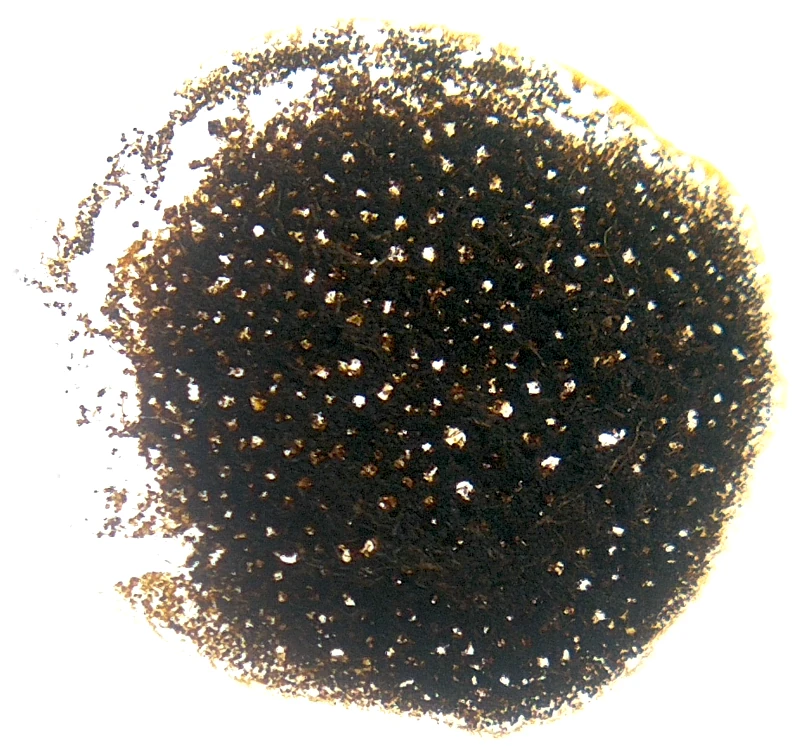
- Irregular residue
Characterized by craters of varying sizes left behind when bubbles burst, the residue is relatively thick and often uneven, featuring a mix of gaps and raised areas.
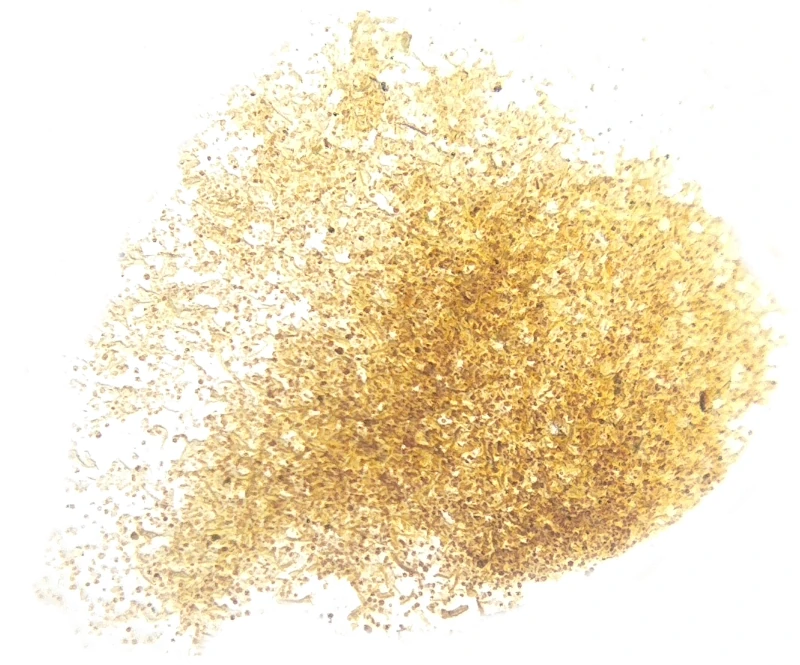
- Homogeneous residue
When the post-vaporization residue forms a thin, uniform layer across the entire surface, a fine deposit free of craters, you are dealing with a high-qualityfull-melthash.
The less residue remains after vaporization, the higher the initial proportion of vaporizable compounds, the better the quality of the melt.
NB : Even the finest full-melt hash will always leave some residue post-vaporization (e.g. the non-vaporizable cell walls or membranes of the trichomes).
The viscosity of the hash upon initial heating is also an early indicator of its quality. A high-quality full-melt hash, very rich in volatile terpenes, will become as fluid as water when heated. A lower-quality hash will typically have the consistency of oil.
Tip : Use the viewing window on the Sipqo vaporizer under good lighting to clearly observe the hash as it melts and vaporizes away!
Beware of imitations!
Unfortunately, many products on the market (France) are sold under labels such as ‘full-melt hash’, Bubble hash, 5–6 star hash, Piatella, or Ice-o-Lator, when in reality, they are nothing of the sort.
Confirming their authenticity visually, whether in person or via photographs, is often quite difficult, if not impossible. An unusually low price can be a useful red flag, but vaporizing the product is the most reliable way to identify it
Indeed, these products often lack terpenes due to their production method; consequently, their aromas and scents are significantly muted compared to authentic full-melt resin. Furthermore, the throat sensation they provide is quite mediocre, often entirely missing the throat hit characteristic of well-concentrated terpenes.
Here are a few examples of “fake” full-melt hash we have encountered in recent years in France:
- Jelly hash
In this case, rosin or a solvent-based extract is mixed with a more traditional type of hash to enhance its soft, melty consistency, usually at the expense of flavor.
Depending on the dilution ratio, it can be quite hard to identify based on taste alone. The product often has a high viscosity. Examining the residue left on your fingers can sometimes provide a clue: if it separates into two distinct phases, one that is very “oily” and transparent, and another that is opaque and thicker, it is likely a sign of this type of product. - Reconstituted resin
If the residue appears thicker than that of a genuinefull-melt, you may be dealing with a pseudo-resin, a product reconstituted from non-vaporizable plant matter combined with a solvent-based extract or rosin. Like jelly hash, these products often have a high viscosity, and the residue left on your fingers can serve as an indicator. - Rosin / solvant-based
If afull-melthash leaves no residue whatsoever after vaporization, it is at best rosin, and at worst a solvent-based extract blended with various (natural or synthetic) flavoring agents. - Extracts mixed with other substances
On several occasions and from various sources, we have encountered so-calledfull-melthashs with a sweet/caramelized taste. These products burned very rapidly, leaving behind thick, hard, black and coal-like residues that were shiny and insoluble in alcohol.
These are likely not genuine resins. More concerningly, they have been adulterated with a sugar-based substance, rendering them unsuitable for vaporization—as sugar burns too quickly at too low a temperature. An absolute scandal! [We confirmed this theory using urine test strips (which yielded a positive result for glucose) after dissolving the suspicious hash in a 2 mixtures of water and alcohol. The sellers of these products were notified but unfortunately, none took any meaningful action to our knowledge.]
Let us now examine the various production methods for full-melt hash.
Producing full-melt hash
It all begins with a grower who knows how to select and grow plants to full maturity, with top-quality flowers, dense and well-developed bracts and a thick coating of large trichomes.
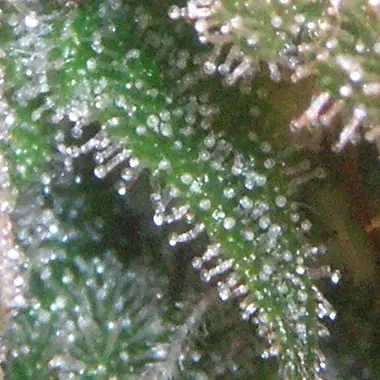

Trichomes are small outgrowths found primarily on the surface of hemp flowers. They resemble tiny mushrooms with very long stalks (for the specific type of trichome of interest here, though other types exist). These structures act as micro-factories, producing a variety of organic compounds, such as terpenes and flavonoids, which they store within the bulb at the top of their stalk.
To obtain full-melt hash, these terminal bulbs must be separated from the rest of the plant matter with minimal contamination (such as microscopic plant debris, trichome stalks, or pistils) and then sorted by size.
To best capture the aromatic profile of the living flowers and limit the evaporation of volatile compounds, this separation process should take place immediately after harvest using freshly cut plants, or later using plants that were frozen while still fresh. This is known as live extraction, as the plants are effectively still alive (or nearly so) at the time of separation.
Alternatively, the process can be performed using dried flowers. However, the resulting quality is often lower, as the most volatile compounds are lost during the drying process. Furthermore, separation becomes more difficult because dried plant material is more fragile, leading to a higher concentration of microscopic debris compared to fresh or frozen plant material.
Charas
The first traditional method, likely the oldest, potentially dating back thousands of years (though its exact origins remain unknown) involves rubbing fresh flowers, with varying degrees of pressure, against the palms of one’s hands. This process collects crushed trichome glands, which form a resin known as charas.
It is an extremely slow and tedious technique, yielding only a few grams of extract per hour, per person. It requires great care to minimize contamination from plant debris and to produce a full-melt resin (unlike shown in the following video!).
Charas must be consumed shortly after production, as it degrades quickly when exposed to air. For this reason, most products sold as charas today are almost certainly not the real thing, the process cannot be industrialized for mass production and the product deteriorates too rapidly to be sold commercially.
Harvesting charas, Uttarakhand, Inde, Yann, CC BY-SA 4.0, via Wikimedia Commons
Dry separation and sieving
The other traditional method, which dates back several centuries, involves gently agitating dried flowers to collect and classify the material that falls from them through sieves of varying mesh sizes (natural silk scarves historically). The goal is to isolate only the trichome heads, which measure approximately 180 μm to 25 μm in diameter.
Resin produced using this method is often full-melt only at the very beginning of the extraction process (e.g. the first 5% of the resin collected), the remainder typically containing too many contaminants.
Wet separation and sieving
A bit of history
A modern separation method using cold water was developed starting in the 1970s and 1980s. Publicly, the story may have begun with “Sadu Sam’s Secret”, an article published in High Times magazine in 1987 (or 1988, depending on the source) which revealed the secret of using cold water to produce high-quality extracts. According to the legend, David Paul Watson (USA), known as “Skunk Man Sam” or “Sam the Skunkman”, learned this secret from Nevil Schoenmakers (Australia/Netherlands), who in turn had learned it from an unknown American.
This method was further refined in the late 1990s, notably with the 1997 invention of the Ice-Cold Extractor by Reinhard Delph (Switzerland/USA). This device mechanized the separation of trichomes and introduced the innovation of adding ice to the cold water during the process to maintain a consistently low temperature.
After seeing this machine operating, an individual named Eldon suggested incorporating filter bags placed inside buckets into the system. This inspired Mark Rose to coin the name “Ice-O-Lator” for the resins produced using this technique. Rose began manufacturing these filter bags, while Mila Jansen, the inventor of the Pollinator®, took on the role of promoting and selling them under the Ice-O-Lator brand.
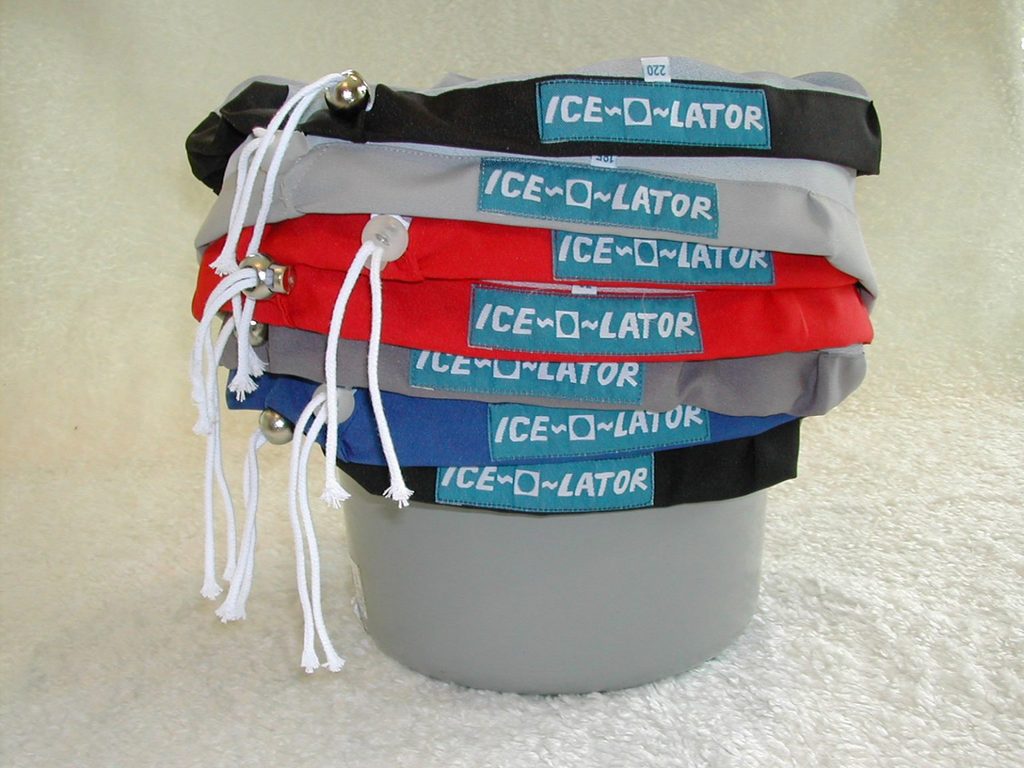
In 1999, Marcus “Bubbleman” Richardson (a student of Skunk Man Sam) sought to market Mila Jansen’s extraction bags in Canada. But following a disappointing meeting with her, he decided to create his own line of bags under the name Bubble Bag™ (also manufactured by Mark Rose). He offered a more comprehensive system, featuring a greater number of bags for finer categorization and minimal trichome loss, and included a pressing screen designed to remove as much water as possible from the resin immediately after separation.
More recently, freeze drying the extract right after its wet separation was introduced to replace the older pressing and crumbling method, with the goals of drying the extract as quickly as possible while reducing the loss of very volatile compounds (on top of removing a very painful step!).
Production technique
Dried or fresh flowers are soaked in water kept below 4 °C, then agitated with varying degrees of gentleness using a tool (such as a metal or wooden paddle). The water rehydrates the plant material (if it was dry), making it less brittle, while the cold temperature hardens the trichome heads, preventing them from being crushed during agitation, it also likely facilitates their detachment from the plant. The movement of the water combined with the contact and friction between the flowers, helps to mechanically dislodge the trichome heads.
Once the trichomes have been separated from the flowers, they are collected (while still in cold water) and sorted by size by passing them through a series of screens with varying mesh sizes (ranging from 180 μm to 25 μm in diameter; the highest-quality trichomes typically falling within the 160 μm to 73 μm range). They are then dried using methods such as air-drying, freeze-drying, or cold or warm drying, and subsequently cured (or left uncured) through various techniques, including vacuum-sealing, air-curing, storage in sealed containers, or cold or warm curing.
This cold-water extraction method allows for very high yields of trichomes from the flowers, with a level of quality that degrades far less during the process compared to dry extraction at room temperature. It is even possible to obtain a 100% full-melt product using water, provided the flowers are carefully selected!
While other extraction methods exist (e.g. using dry ice), to the best of our knowledge, the majority of full-melt resins on the market today are produced using this cold-water method.
Curing
The curing of full-melt resins is a subject that remains poorly documented to our knowledge (with the possible exception of piatella). The goals of curing are manifold: improved long-term preservation (though this requires further study, as data is currently lacking), the evolution or maturation of aromas (e.g. the creation of hashishene), and enhancing the resin’s visual appeal (by making it glossy), among others.
Curing can also improve the resin’s texture over time. Initially malleable and elastic immediately following extraction, high-quality hash often becomes quite hard during the first few weeks of the curing process, potentially due to the crystallization of some molecules, while also lightening in color (the white stuff is not mold!). Subsequently, it will gradually soften and darken, losing much of its original elasticity. Concurrently, it will become more transparent and lustrous, eventually taking on a consistency reminiscent of a fruit paste with varying degrees of malleability.
In some instances, resins that have reached a semi-liquid state after several months of curing may begin to outgas, filling with bubbles of an as-yet-unidentified gas (a phenomenon that could be linked to decarboxylation, (photo-)oxidation, or other processes).
To learn more about resins, their history, how they are produced, and many other topics, you might be interested in the book Hashish! Updated 2nd Edition (2012) by Robert Connell Clarke, ISBN-13 978-0-929349-07-7.
An error on this page? Report it here!